
When high performance is required at minimal weight, sandwich structures are the ideal solution. By bonding thin, strong skins to a lightweight core, they achieve an outstanding stiffness-to-weight ratio and excellent buckling resistance. Sky Composites supplies a full portfolio of structural core materials for marine, wind, transportation, and construction applications, supporting engineers from concept through production.
What is a structural core material and why is it important?
A structural core is the lightweight middle layer in a sandwich composite. It separates the load-bearing skins and carries shear and compressive loads. By increasing the distance between the skins, the core dramatically improves bending stiffness without adding much weight.
Beyond stiffness, core materials play several important roles:
- Enhance impact and buckling performance
- Contribute to thermal and acoustic insulation
- Help control surface quality by reducing print-through from underlying reinforcements
As a result, structural cores are used in a wide range of applications:
- Boat hulls and decks
- Wind turbine blades (shear webs and shells)
- Vehicle interior and exterior panels
- Composite tooling boards
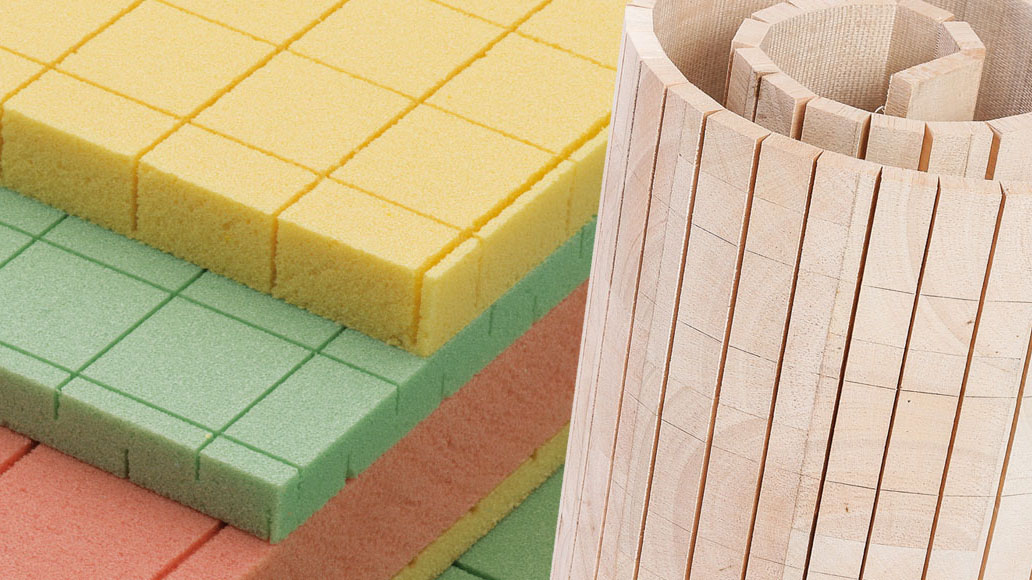
The most commonly heard core materials
Structural cores generally fall into a few common families—each with distinct strengths, processing fit, and best-use scenarios.
Balsa core — high stiffness and compressive strength
Balsa is a natural wood core with an outstanding stiffness-to-weight ratio and high compressive strength. It is widely used in wind energy applications, especially where fatigue resistance and cost efficiency matter. To ensure long-term performance in wet service, careful sealing and good detailing are essential.
PVC foam core — versatile, tough, and widely processable
PVC foam is one of the most versatile core materials. It combines good toughness with consistent mechanical properties and works well with common composite processes such as vacuum infusion and hand lay-up. Available in many densities, PVC foam is a strong all-round choice for general structural applications.
PET foam core — cost-effective and often more sustainable
PET foam is valued for its cost-effectiveness and sustainability profile, as it is often available with recycled content. It provides good mechanical performance for flat or gently curved panels and is easy to thermoform, making it attractive for transportation and construction uses.
PMI foam core — high shear stiffness and high-temperature resistance
PMI foams deliver high shear stiffness and excellent temperature resistance, making them ideal for prepreg processing and high-temperature cure cycles. They are commonly used in high-performance industrial applications where dimensional stability is critical.
Structural honeycomb — maximum stiffness-to-weight
Honeycomb cores, typically made from aluminum or aramid paper, offer exceptional stiffness-to-weight performance. They are best suited for applications requiring maximum rigidity and elevated temperature resistance. However, they demand careful edge closure, potting, and moisture management.
Non-woven mats — thickness and surface quality in multilayer designs
Non-woven mats (also known as laminate bulker) are used to build thickness, improve surface quality, and reduce weight in semi-structural areas. While not intended for primary load-bearing, they are effective when combined with structural cores in multi-layer sandwich designs.
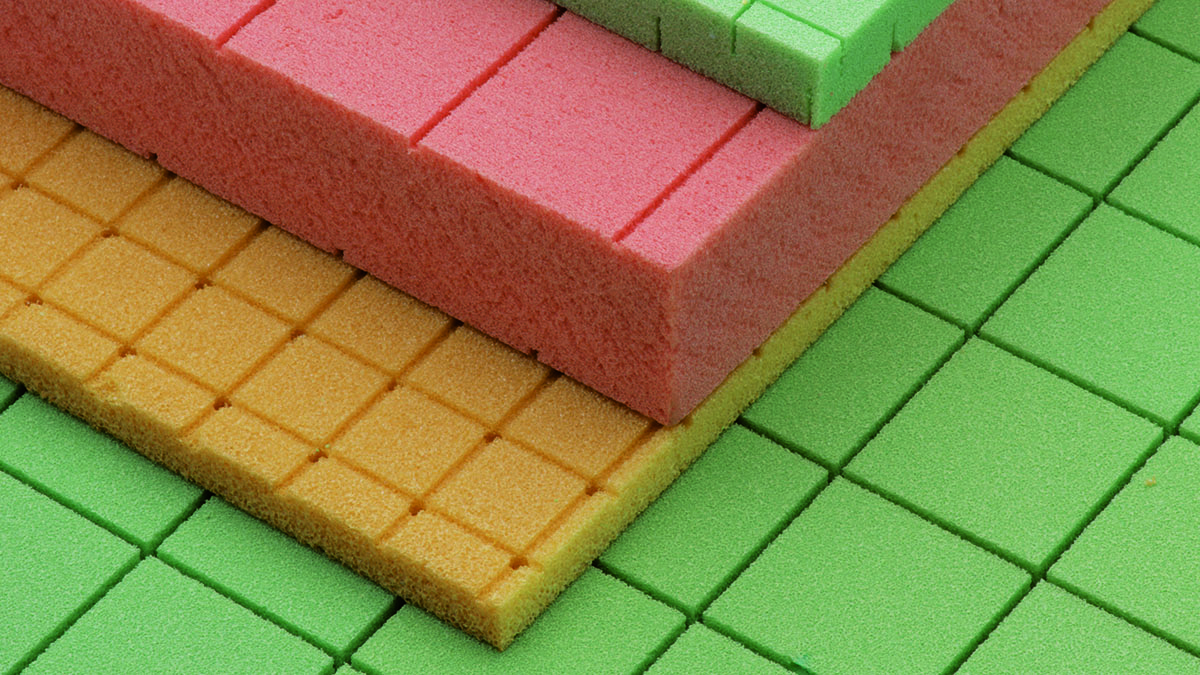
Key properties to consider when selecting a core
Choosing the right core is a balance of structural requirements, manufacturing constraints, and long-term performance. So evaluate these key properties together, not in isolation.
Mechanical performance
Core selection should always start with design loads. Shear modulus, shear strength, and compressive strength determine how the panel handles bending, buckling, and point loads. High-impact or high-fatigue zones may require localized inserts or higher-density core sections.
Density and weight
Lower density reduces weight, but panel stiffness depends heavily on core thickness. In many cases, a thicker, lower-density core delivers better stiffness-to-weight performance than a thinner, denser alternative. Local reinforcement helps prevent crushing under fasteners and concentrated loads.
Temperature and processing
The core must be compatible with the chosen resin system and manufacturing process. PVC and PET foams work well with infusion and wet lay-up, while PMI and honeycomb are better suited to prepregs and higher-temperature cures.
Durability and water/chemical resistance
Closed-cell foams inherently limit water uptake, while balsa requires proper sealing and detailing. Resistance to fuels, oils, solvents, fatigue, and creep should be verified for the intended service environment, especially in marine and transportation applications.
Sustainability and cost — compare total lifecycle value, not only price
PET foams with recycled content and renewable balsa cores support sustainability goals, though performance and supply variability must be evaluated. Beyond material price, total cost of ownership—including processing time, waste, logistics, and service life—should guide final decisions.
Practical tips for selecting a structural core
A few simple rules can prevent expensive redesigns and help you reach the best performance-to-cost outcome.
- Start from loads, not materials: Define spans, pressures, point loads, and safety factors before picking a core family or density.
- Match the core to your manufacturing process: Infusion, wet lay-up, and prepreg place very different demands on temperature capability, resin flow, and handling.
- Combine core types where it makes sense: Use tougher or higher-density cores in impact/fastener zones and lighter options elsewhere to optimize cost and weight.
- Plan details early: Inserts, edge close-outs, cut-outs, and penetrations often drive real-world performance more than the “headline” core properties.
- Think beyond mechanical performance: Consider durability, moisture exposure, acoustics, fire behavior (FST), and sustainability targets alongside strength and stiffness.
- Involve your supplier early: Sharing load cases, geometry, and process details helps fine-tune core choice, density, and detailing for a smoother path to production.
Structural core material from Sky Composites
Explore the full range of balsa, PVC, PET, PMI, honeycomb, and bulker solutions from Sky Composites, along with expert guidance on densities, processing, and detailing—contact our engineering team for support in selecting the right core material for your next project.
Related products

PMI foam core
Lightweight, high-strength material with exceptional mechanical properties and heat resistance.

Balsa core
High-density organic core material featuring high compressive strength.

PVC foam core
Excellent strength-to-weight properties and superior chemical stability.

PET foam core
Recyclable core materials with high compressive strength.

Structural honeycomb
100% recyclable, durable solution with superior sound-damping and impact absorption.

Laminate bulker
High-performance laminate bulker designed for lightweight, durable composites, offering significant weight savings and exceptional impact resistance.
