
Honeycomb and foam cores are both widely used to create lightweight, stiff sandwich structures. By placing a low-density core between two strong skins, manufacturers can increase bending stiffness and structural efficiency without building a thick solid laminate.
However, the honeycomb core vs foam core comparison does not have one universal winner. The two material families differ in internal structure, directional behavior, processing requirements, environmental resistance and suitability for complex shapes. Their performance also depends on the specific material, density, thickness and complete sandwich design.
This guide explains the key differences between foam and honeycomb cores and outlines the factors that should determine material selection for a composite application.
What Is Foam Core?
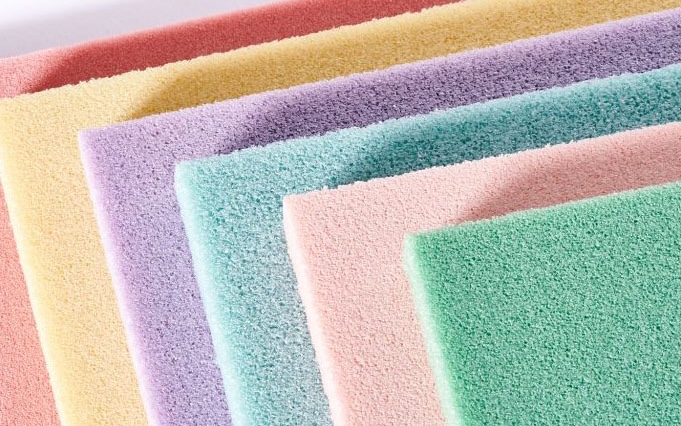
Foam core is a lightweight cellular material used as the core of composite sandwich structures. Common structural foam types include PVC, PET and PMI:
- PVC foam offers a useful balance of mechanical performance, chemical stability and processability.
- PET foam provides high compressive strength and is available in recyclable and recycled-content solutions.
- PMI foam is selected for demanding lightweight structures that require high mechanical properties and elevated-temperature processing capability.
Because performance varies by chemistry and grade, the selected foam must be compatible with the resin system, processing temperature, geometry and service environment.
What Is Honeycomb Core?
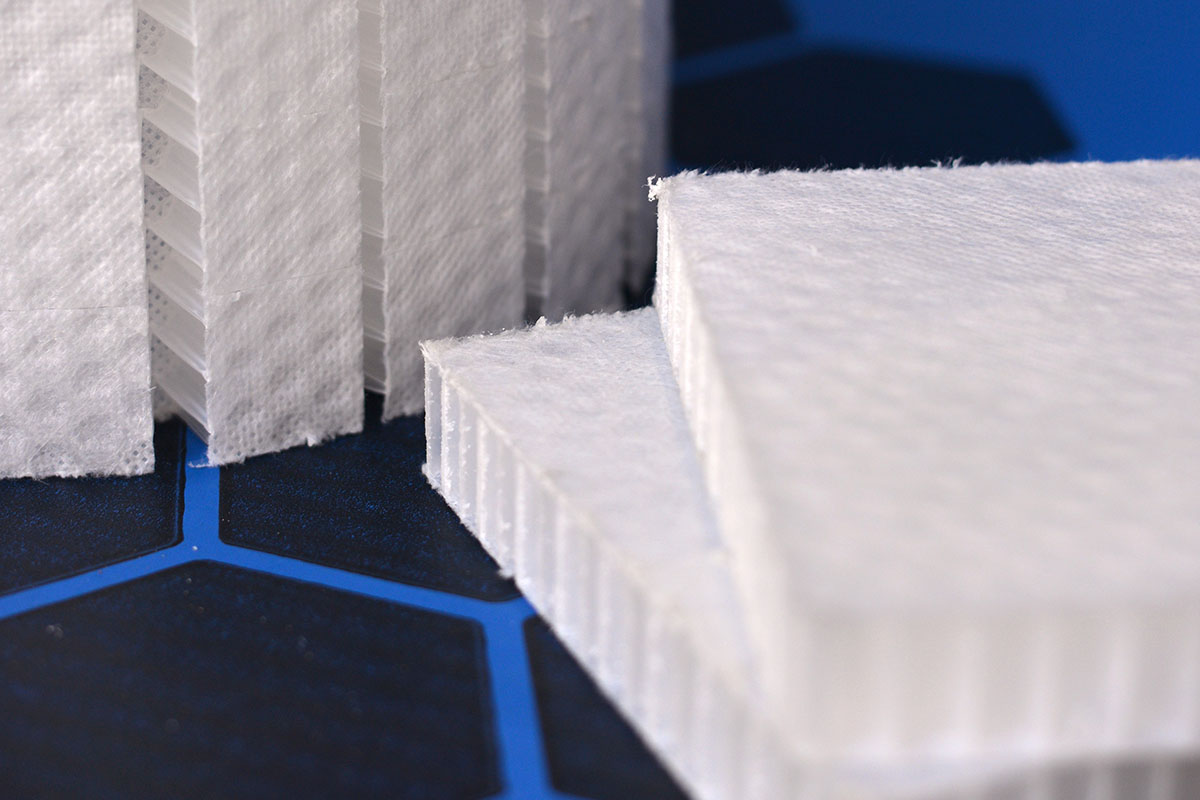
Honeycomb core is a lightweight cellular core made from repeating cells. Honeycomb products are available in different materials and cell configurations, with performance influenced by factors such as web material, cell size, density, wall thickness and cell geometry. Common honeycomb materials include polypropylene, aramid paper, aluminum and fiberglass.
Sky Composites supplies Carbon-Core polypropylene structural honeycomb with bonded polyester scrims and a resin-limiting barrier film. The polypropylene honeycomb is designed for impact absorption and sound and vibration damping, while the barrier film helps limit resin uptake during lamination.
Key Differences Between Foam Core and Honeycomb Core
The main difference between foam core and honeycomb core is their internal architecture. That difference influences load transfer, damage behavior, bonding, moisture management and manufacturing. However, neither category represents a single material. A PVC foam, PET foam and PMI foam can perform very differently, just as polypropylene, aramid and aluminum honeycomb have different properties and processing requirements.
Internal Structure and Directional Properties
Foam core has a continuous cellular structure. Although foam properties are not perfectly identical in every direction, structural foam is generally less direction-dependent than conventional honeycomb.
Honeycomb is built from repeating cells. Its mechanical properties depend on cell geometry and loading direction, commonly described using ribbon and transverse directions. This directional behavior must be considered when orienting sheets and designing the complete panel. It can be used effectively, but it requires the engineer to match the core orientation to the expected loads.
Strength and Stiffness-to-Weight Performance
Both material families are used to increase panel thickness and bending stiffness without the mass of a solid laminate. Honeycomb can deliver exceptional structural efficiency in properly designed lightweight panels, while structural foams are available across a broad range of densities and mechanical properties.
It is not technically correct to say that honeycomb is always stronger or stiffer than foam. The comparison changes with core chemistry, density, thickness, cell size, load direction and the type of failure being considered. Compressive strength, shear strength and shear modulus should be evaluated against the real load case rather than compared as isolated headline values.
Impact and Damage Behavior
Impact behavior cannot be assessed from the core family alone. Foam may deform or crush locally under impact, while honeycomb cells may buckle or collapse. In both cases, the skins can also crack or debond from the core.
Foam often provides continuous support beneath the laminate and can offer good damage tolerance, depending on its chemistry and density. Polypropylene honeycomb can provide strong impact absorption and rebound behavior. However, the final response is controlled by the full sandwich design, including the skin material, core thickness, bond quality, local support and impact energy.
Moisture and Environmental Resistance
Closed-cell structural foams can provide low water absorption, but this property should always be checked for the selected chemistry and grade. PVC, PET and PMI foams also differ in chemical resistance and service-temperature capability.
Honeycomb performance depends on the web material. Polypropylene honeycomb is rot-proof and corrosion-resistant, while aluminum honeycomb requires suitable protection in corrosive environments. Any honeycomb sandwich panel should be carefully sealed around edges, inserts and penetrations because damaged or open cells can allow moisture to travel within the panel.
The external laminate, adhesive, surface protection and quality of the edge details are therefore as important as the core itself.
Machining, Forming and Complex Geometries
Foam core is often easier to machine into tapers, rebates, cut-outs and local thickness changes. Many grades can also be thermoformed or supplied in scored and scrim-backed formats for curved structures. This makes foam a practical choice for complex moulds and variable panel geometries.
Honeycomb formability depends strongly on its material and cell configuration. Conventional honeycombs are available in over-expanded and flexible configurations for curved components, while Sky’s polypropylene structural honeycomb is thermoformable. Required radius, detailing and manufacturing method should therefore be checked for the specific product.
Bonding and Manufacturing Requirements
Foam generally provides a continuous surface for bonding to the skins. This can simplify adhesive application and laminate support, although surface preparation and resin compatibility remain important.
Honeycomb transfers load through its cell walls and bonds to the skins primarily along the cell edges. Reliable performance therefore depends on the adhesive system, bond quality and correct processing pressure. Panel edges, penetrations and inserts often require potting, close-outs or local reinforcement.
In infusion processes, foam can be supplied with grooves, perforations and cuts that support resin distribution and help it conform to curved tooling. Bare open-cell honeycomb requires careful resin control because resin can enter the cells. Polypropylene honeycomb products may use bonded scrims and resin-limiting barrier films to improve processing.
Advantages and Limitations of Foam Core
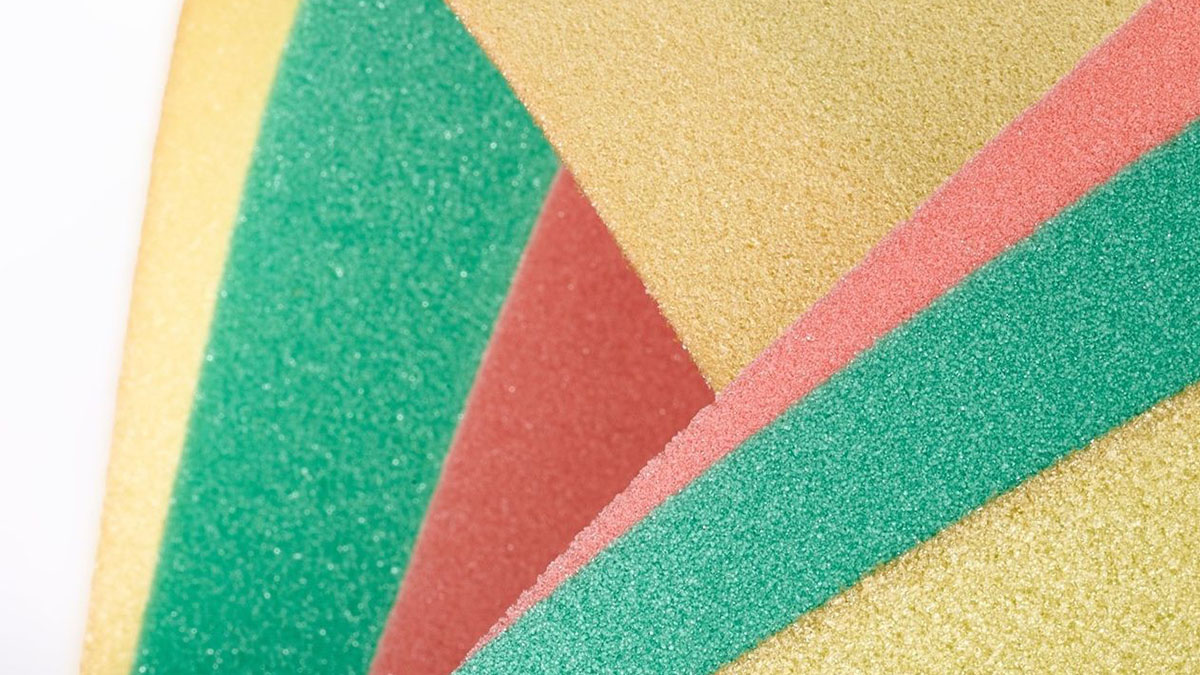
Structural foams are available in multiple chemistries, densities and processing formats, giving designers considerable flexibility. Depending on the selected grade, they can be machined, thermoformed, scored, grooved or supplied as pre-cut kits.
Potential advantages include:
- continuous support and bonding across the core surface,
- suitability for curved and complex geometries,
- straightforward machining and local shaping,
- broad compatibility with wet lay-up, infusion and prepreg processes when the correct grade is selected,
- low water absorption in suitable closed-cell materials,
- a wide range of mechanical and temperature capabilities.
Their limitations also vary by chemistry. Temperature resistance, resin uptake, fatigue behavior and mechanical performance must be checked for the specific material and density. Local loads may require higher-density inserts or reinforced core areas.
Foam core is commonly considered for:
- marine and transportation structures,
- wind-energy components,
- sports and leisure equipment,
- resin-infused parts,
- components with complex geometry or tapered core zones,
- applications requiring thermal insulation or low water uptake from an appropriate closed-cell grade.
Advantages and Limitations of Honeycomb Core
Honeycomb structures can deliver excellent stiffness-to-weight performance and enable very lightweight sandwich panels. Depending on the material and cell configuration, they can also provide impact absorption, acoustic damping and resistance to corrosion or rot.
Potential advantages include:
- high structural efficiency at low weight,
- a wide choice of cell sizes, densities and materials,
- strong potential for flat and lightweight panel construction,
- useful sound- and vibration-damping behavior in polypropylene grades,
- recyclable options for applications with sustainability targets.
Potential limitations include direction-dependent properties, more demanding edge and insert detailing, and the need for careful bonding and sealing. Open cells may also complicate resin control unless the product includes a suitable barrier or facing system.
Honeycomb core is commonly considered for lightweight panel structures where the selected honeycomb type fits the required load case and manufacturing process. For Sky’s polypropylene Carbon-Core, relevant applications include marine, transportation and industrial panels where impact absorption, sound and vibration damping, corrosion resistance or recyclability are important.
How to Select the Right Core Material
The final choice should be based on the complete part and manufacturing process, not on the core family alone. Key questions include:
- What loads and point loads will the structure experience?
- Is the geometry flat, curved or complex?
- Which manufacturing process and cure temperature will be used?
- What environmental conditions will the part face in service?
- Are inserts, edge close-outs or local reinforcements required?
Core density and thickness must also be considered together. A thicker, lower-density core may provide a better stiffness-to-weight result than a thinner, denser option, while higher-density areas may still be needed around fasteners or concentrated loads. For a broader selection framework, read our composite core material selection guide.
Need Help Choosing the Right Core Material?
Choosing a core material requires more than comparing individual datasheet values. Sky Composites supplies foam and structural honeycomb solutions for different manufacturing methods, geometries and performance requirements. Our team can help you evaluate core type, density, thickness, processing options and local reinforcement needs as part of the complete sandwich design.
Explore our full range of composite core materials or contact us to discuss the right solution for your application.
Related products

Structural honeycomb
100% recyclable, durable solution with superior sound-damping and impact absorption.

PVC foam core
Excellent strength-to-weight properties and superior chemical stability.

PET foam core
Recyclable core materials with high compressive strength.

PMI foam core
Lightweight, high-strength material with exceptional mechanical properties and heat resistance.
