

Controlled resin flow is essential for achieving consistent laminate wet-out during vacuum infusion. The resin must reach the entire reinforcement before it begins to gel, while displaced air needs a clear route out of the laminate. This process is influenced by more than resin viscosity or vacuum pressure. Reinforcement permeability, component geometry, inlet positioning, core configuration and the selected vacuum infusion materials all affect how the resin front advances.
In sandwich composite structures, the core material can also become part of the resin distribution system. Grooves, perforations, infusion cuts and accurately fitted core sections create or influence flow paths within the component. When these features are coordinated with the external infusion setup, they can support more predictable resin distribution and repeatable manufacturing.
Why controlled resin flow matters in vacuum infusion
During vacuum infusion of a sandwich component, dry reinforcement and core materials are arranged in the mould and sealed beneath an airtight bag. Evacuating the bag removes air and creates a pressure differential between the resin supply and the laminate, which drives resin through the dry reinforcement.
The objective is not simply to move the resin as quickly as possible. The flow front must advance in a controlled and balanced way so that all areas of the reinforcement stack are impregnated before the resin reaches the vacuum outlet or begins to gel.
Poorly controlled resin flow may contribute to:
- dry areas or incomplete fibre wet-out;
- trapped air and voids;
- uneven resin distribution;
- resin-rich or resin-starved areas;
- excessive resin consumption;
- inconsistent component quality.
The objective is therefore controlled, complete impregnation within the resin’s processing window, not maximum flow speed.
How core processing creates resin flow paths
Core materials help improve stiffness and structural efficiency in sandwich structures while keeping weight under control. Their surface finish, processing pattern and fit can also influence resin movement during infusion.
Different core processing methods support different types of flow. Some create channels across the surface of the core, while others allow resin and air to move through its thickness. Cuts and scoring patterns can also improve conformity to complex mould surfaces and reduce uncontrolled gaps.
Grooves and surface flow channels
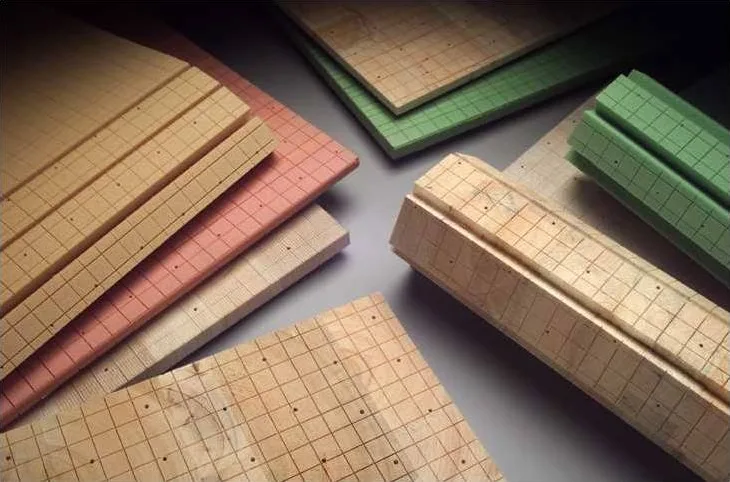
Grooves create open channels along the surface of the core. Resin can travel through these channels more easily than through compacted reinforcement, helping it spread across the component.
These channels mainly support in-plane resin distribution. Their direction, spacing, width and depth can influence how quickly the resin moves and which areas it reaches first.
Wider, deeper or more closely spaced grooves can increase flow capacity, but they also create more volume that may fill with resin. This can increase resin consumption and the final mass of the component.
The selected pattern must therefore balance several objectives:
- sufficient resin distribution;
- controlled flow direction;
- acceptable infusion time;
- limited resin uptake;
- avoidance of unintended preferential flow paths.
Perforations and through-thickness flow
Perforations create passages through the thickness of the core. While surface grooves mainly support in-plane flow, perforations allow resin and displaced air to move between the laminate skins on opposite sides of the core.
This can be particularly relevant when both sides of a sandwich structure are infused during the same process. A suitable perforation pattern can help resin reach the second skin and provide additional routes for air evacuation.
The appropriate perforation pattern is application-specific and should be selected with the core type and thickness, laminate construction, resin system and component geometry in mind.
Perforations do not independently guarantee complete wet-out or void-free manufacturing. They form part of a broader flow strategy that also includes the reinforcement architecture, resin system, inlet layout and vacuum setup.
Scored, slit and formable core
Scoring, slits and grid-scored formats are primarily used to help rigid core sheets conform to curved or complex mould surfaces. Better conformity can reduce unplanned gaps beneath or between core sections, which may otherwise become preferential resin paths.
Because the cuts can fill with resin, their dimensions and density may influence resin uptake and final component mass. The pattern should therefore be selected for the required formability and infusion strategy.
Core joints, gaps and race tracking
Resin tends to follow paths of lower resistance. Oversized gaps between core pieces can therefore act as highly permeable channels.
Resin may move rapidly through these gaps while travelling more slowly through the adjacent reinforcement. This preferential movement can disturb the flow front and contribute to race tracking.
Potential risk areas include:
- irregular joints between core sections;
- gaps around inserts;
- open mould edges;
- poorly fitted corners;
- cavities beneath core sheets.
Race tracking can cause resin to reach the vacuum outlet before the surrounding reinforcement is fully impregnated. For this reason, core installation accuracy should be considered part of infusion process control.
Pre-cut core kits and process repeatability
Pre-cut and sequenced core kits reduce on-site cutting and adjustment during lay-up. Consistent piece geometry can help operators reproduce the intended joint layout and positioning around inserts or mould features.
Core kits do not guarantee successful infusion, but they can reduce one source of lay-up variation and support a more consistent production setup.
Customised processing also allows grooves, perforations, cuts and edge details to be adapted to the geometry and manufacturing requirements of the component.
How vacuum infusion materials complete the flow system
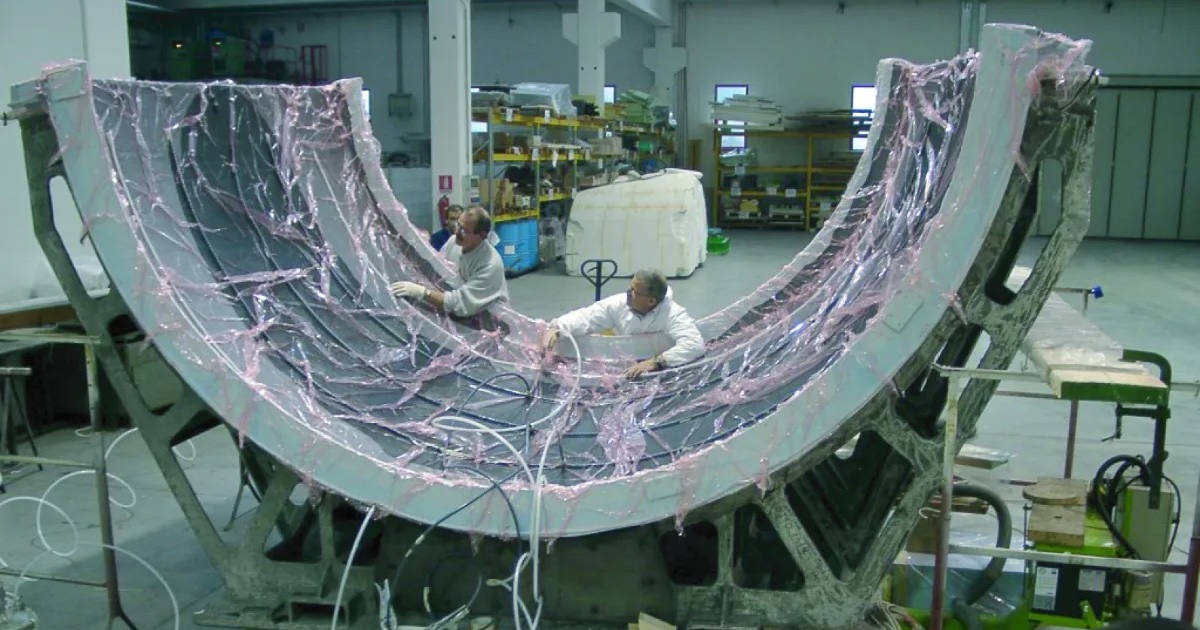
Processed core materials create or influence flow paths within the sandwich structure. Vacuum infusion materials complete the system by distributing resin above the laminate, introducing resin into the assembly, removing displaced air and maintaining vacuum integrity.
Infusion mesh provides a highly permeable route across the laminate surface. It allows resin to spread over a wider area before moving through the reinforcement below. Its position and coverage need to be controlled, as excessive or poorly planned coverage may cause the resin to move ahead of slower areas.
Resin feed lines introduce resin into the sealed assembly, while vacuum lines maintain the pressure difference and provide a route for air to leave the laminate. Their position strongly influences the general flow direction and the distance the resin must travel.
Bagging film and sealant tape create the airtight enclosure required for the process. The film must conform to the mould without bridging, tearing or puncturing, while the sealant tape must maintain a reliable connection between the film and the mould surface.
Even a well-designed flow network cannot perform consistently if air leaks into the system.
For a detailed overview of bagging films, sealant tapes, release materials, infusion mesh and other consumables, read our Vacuum Bagging Materials Guide.
Matching the core pattern to the infusion strategy
There is no universal core processing pattern or infusion setup suitable for every composite component.
The appropriate combination depends on:
- component size and geometry;
- core material and thickness;
- laminate thickness and reinforcement permeability;
- resin viscosity and working time;
- required flow direction and distance;
- inlet and vacuum line positioning;
- acceptable resin uptake and component weight;
- production volume and repeatability requirements.
A processing pattern that works for a simple flat panel may not be suitable for a curved or locally thickened component. The selected flow network must balance filling time with control of preferential flow and resin uptake.
Core finish, laminate architecture, resin system, component geometry and structural requirements should therefore be evaluated together.
For larger, complex or critical components, representative trials can help verify the planned flow behaviour before full-scale production.
Common resin flow problems and possible contributing factors
Infusion defects often have multiple causes, so the core finish, laminate architecture, resin system, consumable layout and vacuum integrity should be assessed together.
- Dry areas or incomplete wet-out: may result from excessive flow distance, insufficient resin distribution, local flow restrictions or gelation before impregnation is complete.
- Race tracking: may occur along core joints, mould edges, inserts or other low-resistance gaps, allowing resin to bypass adjacent reinforcement.
- Uneven flow front: can be linked to inlet layout, component geometry, thickness changes, compaction or local permeability variation.
- Excessive resin uptake: can result from oversized grooves, large core joints, unplanned cavities or more distribution media than the process requires.
Conclusion
Reliable vacuum infusion depends on coordinated resin distribution, air evacuation and vacuum integrity. In sandwich structures, grooved and perforated core finishes can form part of the flow network, while scored or slit formats improve conformity and help control unplanned gaps. A well-designed setup balances complete wet-out, processing time, resin consumption and final component weight.
Sky Composites supplies structural core materials, customised core processing, pre-cut core kits and vacuum bagging materials for resin infusion and other composite manufacturing processes. Explore our core material processing services and vacuum bagging materials, or contact our team to discuss a process-specific solution.
Related products

Vacuum bagging materials
Explore our full range of vacuum bagging materials.

Balsa core
High-density organic core material featuring high compressive strength.

PVC foam core
Excellent strength-to-weight properties and superior chemical stability.

PET foam core
Recyclable core materials with high compressive strength.

PMI foam core
Lightweight, high-strength material with exceptional mechanical properties and heat resistance.
