
The history of carbon fiber is closely tied to high-performance engineering. Today, carbon fiber is almost synonymous with high-performance engineering. It is used in motorsport, performance vehicles, aircraft structures, racing yachts and advanced sports equipment. At first glance, it may seem like a relatively young material, but its origins go back more than 150 years. In fact, its earliest story is closely tied to the birth of practical electric lighting — and to the work of Joseph Swan and Thomas Edison.
Early experiments with the light bulb
Carbon fiber first entered history through the early development of incandescent lamps, when Joseph Swan and Thomas Edison experimented with carbonized filaments.
These early filaments were, of course, not carbon fiber composites in the way we understand them today. But they introduced an important idea: when formed into fine fibers, carbon could offer valuable technical properties.
At that stage, the goal was not structural performance. The aim was simply to create a reliable filament that could glow without burning out too quickly.
The accidental birth of modern carbon fiber
The modern history of high-performance carbon fiber began much later. In 1958, physicist Roger Bacon, working at Union Carbide’s Parma Technical Center, discovered extremely strong graphite whiskers.
Bacon was not trying to create a new material for aircraft or race cars. He was studying graphite under extreme conditions when he observed thin, highly ordered graphite filaments — a laboratory discovery that later helped open the door to high-performance carbon fiber composites.
His work helped establish the scientific foundation for carbon fibers as structural materials, not just electrical filaments. Carbon was no longer only a material for heat, electricity or chemistry — it was becoming a candidate for lightweight, high-strength engineering applications.
The rise of PAN-based carbon fiber
The next major breakthrough came with PAN-based carbon fiber — this time on purpose. PAN, or polyacrylonitrile, became one of the most important precursors for producing strong, consistent carbon fibers.
By the late 1960s and early 1970s, carbon fiber was moving from research laboratories into commercial production. PAN-based production offered a more practical route toward industrial-scale manufacturing, allowing carbon fiber to enter applications where performance justified the cost: aerospace components, sporting goods, motorsport and other demanding engineering fields.
Toray introduced TORAYCA™ T300 in 1971, a product the company later described as the world’s first commercialized PAN-based carbon fiber. This helped set the stage for broader use in high-performance industries.
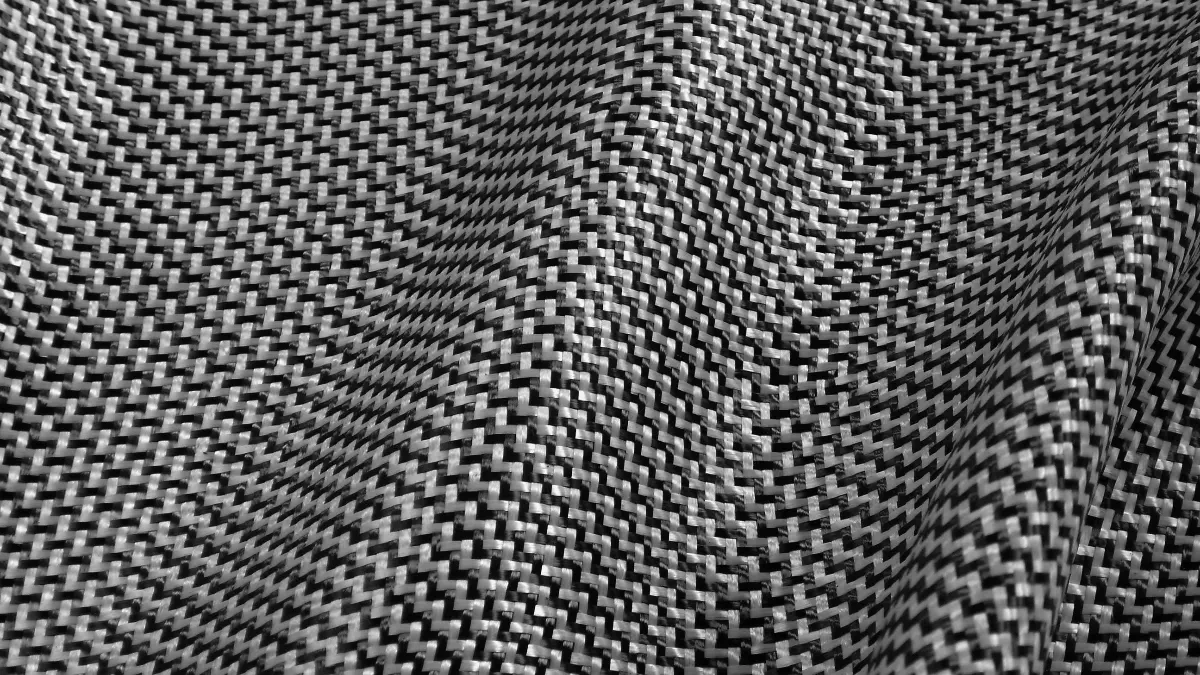
From carbon fiber to carbon fiber composites
Carbon fiber alone was only part of the breakthrough. Its real structural potential emerged when engineers combined high-strength fibers with resin systems and began building layered composite structures.
In these materials, the fibers carry much of the load, while the resin holds them in place and transfers forces between them.
This opened the way to carbon fiber reinforced polymers, prepregs and laminates — the foundation of many modern aerospace, motorsport, marine, wind energy and high-performance industrial applications.
An ambitious idea that revolutionized motorsport
Motorsport was already beginning to explore carbon fiber, but one of the most visible turning points came in 1981. McLaren designer John Barnard had an ambitious idea: to build a Formula 1 monocoque from carbon fiber composite.
At the time, the concept was met with considerable skepticism. Many questioned whether the material would be strong enough, safe enough or reliable enough for the extreme demands of Grand Prix racing. The McLaren MP4/1 soon proved them wrong.
It was not just a lighter way to build a race car. It changed how engineers thought about driver safety, stiffness and structural performance.
From that point on, carbon fiber’s rise became difficult to stop — first reshaping motorsport, and later becoming a defining material in high-performance road cars as well.
From material innovation to composite engineering
Over time, the conversation around carbon fiber evolved. It was no longer enough to ask whether a component was made of carbon. The real question became how the fibers were arranged, how the layers were built, which resin system was used and how the composite structure was manufactured.
This lesson appeared early in motorsport as well. During the development of carbon fiber structures, one simple demonstration could make the material look surprisingly weak: bend a unidirectional carbon fiber composite sample in the wrong direction, and it could snap.
But that was not a failure of carbon fiber. It was a reminder that composites are directional materials: their strength depends on how the fibers are oriented and how the laminate is designed.
A unidirectional layer behaves differently from a woven fabric; a multiaxial reinforcement can be designed to carry loads in specific directions; and a hybrid fabric can balance performance, weight and cost.
Carbon fiber today: engineered for specific applications
That same lesson still defines carbon fiber today. Modern composite engineering is not only about the fiber itself, but about creating reinforcement systems tailored to the final application.
A racing component, wind turbine blade, marine structure, automotive part or industrial panel may all use carbon fiber, but not in the same way. Each application has its own loading conditions, production method, surface requirements and cost targets.
For example, in a wind turbine blade, carbon fiber is not used because it looks advanced. It is used where stiffness, weight reduction and load-bearing performance matter.
This is the modern carbon fiber story: not one material for every problem, but engineered reinforcement for specific applications.
Sky Composites and the modern carbon fiber era
This is where Sky Composites enters the modern carbon fiber story. Our carbon fiber fabric portfolio includes:
- multiaxial fabrics for strength,
- woven fabrics for finishing
- special fabrics for specific application needs.
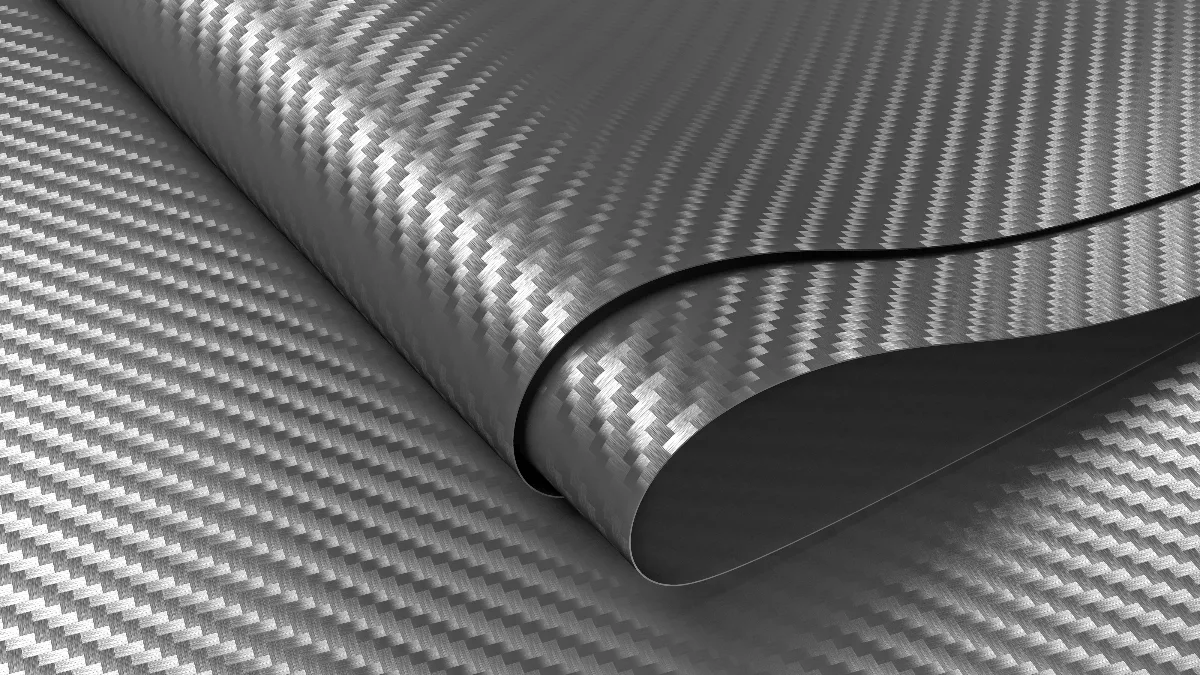
These materials are designed for industries where weight reduction, durability, stiffness and process compatibility matter — from marine and automotive to wind energy, construction and other composite applications.
In this sense, Sky Composites represents the latest chapter in a much longer material story: the shift from carbon fiber as a remarkable material to carbon fiber as an engineered reinforcement system.
Let’s continue the history of carbon fiber together
The history of carbon fiber is not only the story of a material becoming stronger and lighter. It is the story of how engineers learned to control fibers, layers and structures with increasing precision.
Let’s continue that story together. Contact Sky Composites to discuss your project, and our team will help you identify the right carbon fiber, hybrid or composite reinforcement solution for your application.
Related products

Carbon fiber fabrics
Premium multiaxial, woven and special fabrics with superior load-bearing capacity, flex fatigue resistance, and customization options for advanced applications.
