
Choosing the right carbon fiber reinforcement is not only about strength. It is also about direction. This is why carbon fiber fabrics are available in different constructions. Bidiagonal carbon fiber fabrics are especially useful when reinforcement is needed in two perpendicular directions: 0° and 90°.
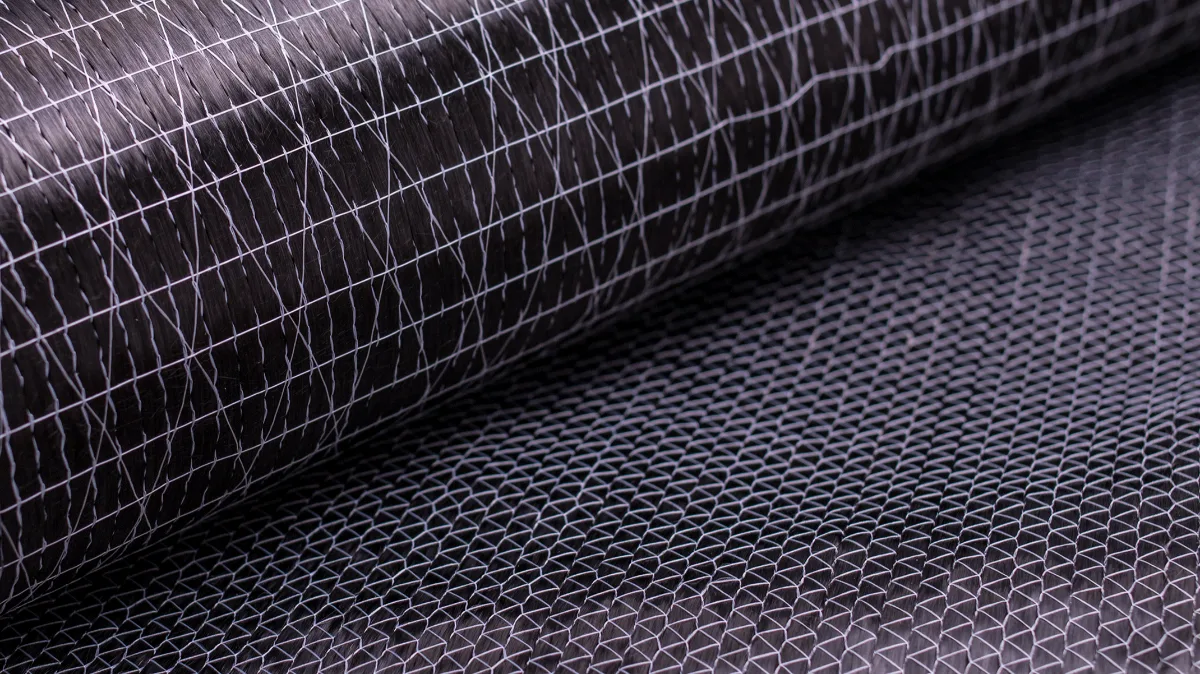
In composite design, fiber orientation determines how effectively the final part can handle tension, compression, bending, shear or torsional loads.
Unidirectional, biaxial, bidiagonal, triaxial and quadriaxial fabrics all serve different structural purposes. To understand when 0°/90° reinforcement makes sense, it helps to start with what bidiagonal construction actually means and how it differs from ±45° and other multiaxial fabric formats.
What are bidiagonal carbon fiber fabrics?
Bidiagonal carbon fiber fabrics are multiaxial reinforcement materials with fibers arranged in two main directions: 0° and 90°. In simple terms, one fiber layer runs along the length of the part, while the other runs across it.
This construction is different from a traditional woven fabric. In non-crimp fabric structures, the fibers are placed in defined directions without being woven over and under each other. This helps keep the fibers straighter, which can improve how efficiently they carry load in the final composite laminate.
The main purpose of bidiagonal reinforcement is not “maximum strength everywhere”. It is targeted reinforcement in two clear directions.
Why fiber orientation matters in composite parts
Carbon fibers perform best when the load follows the direction of the fiber. A 0° layer is highly effective for loads running along the main axis of a part. A 90° layer supports loads across the part and helps improve transverse stability.
This is why fiber orientation is one of the most important decisions in laminate design. A part exposed mainly to bending or lengthwise tension will need a different reinforcement logic than a part exposed to twisting or shear.
Using the wrong orientation can add weight without adding useful performance. The laminate may become stronger in directions that do not matter, while remaining weaker in the directions where the real loads occur.
When 0°/90° reinforcement is the right choice
0°/90° reinforcement makes sense when the main loads act along the length and width of the component. This is common in flat or slightly curved structures where stiffness, dimensional stability and predictable in-plane strength are important.
Typical examples include panels, covers, decks, structural skins, shells and other parts where the load paths are mainly axial and transverse. In these cases, the 0° fibers provide longitudinal stiffness and strength, while the 90° fibers support crosswise load distribution and help stabilize the laminate.
Bidiagonal carbon fiber fabrics are therefore a practical choice when the application requires balanced reinforcement in two perpendicular directions without adding unnecessary fiber angles.
When ±45° reinforcement performs better
±45° reinforcement serves a different purpose. These fiber orientations are mainly used when the component is exposed to shear, torsion or twisting loads.
This is relevant in parts such as tubes, hull sections, blades, frames, curved shells and dynamically loaded structures. In these applications, the forces often do not run neatly along the length or width of the part. Instead, diagonal load paths develop inside the laminate.
The ±45° layers help resist this type of deformation. They improve shear performance and help the structure handle torsional stress more effectively than a purely 0°/90° reinforcement layout would.
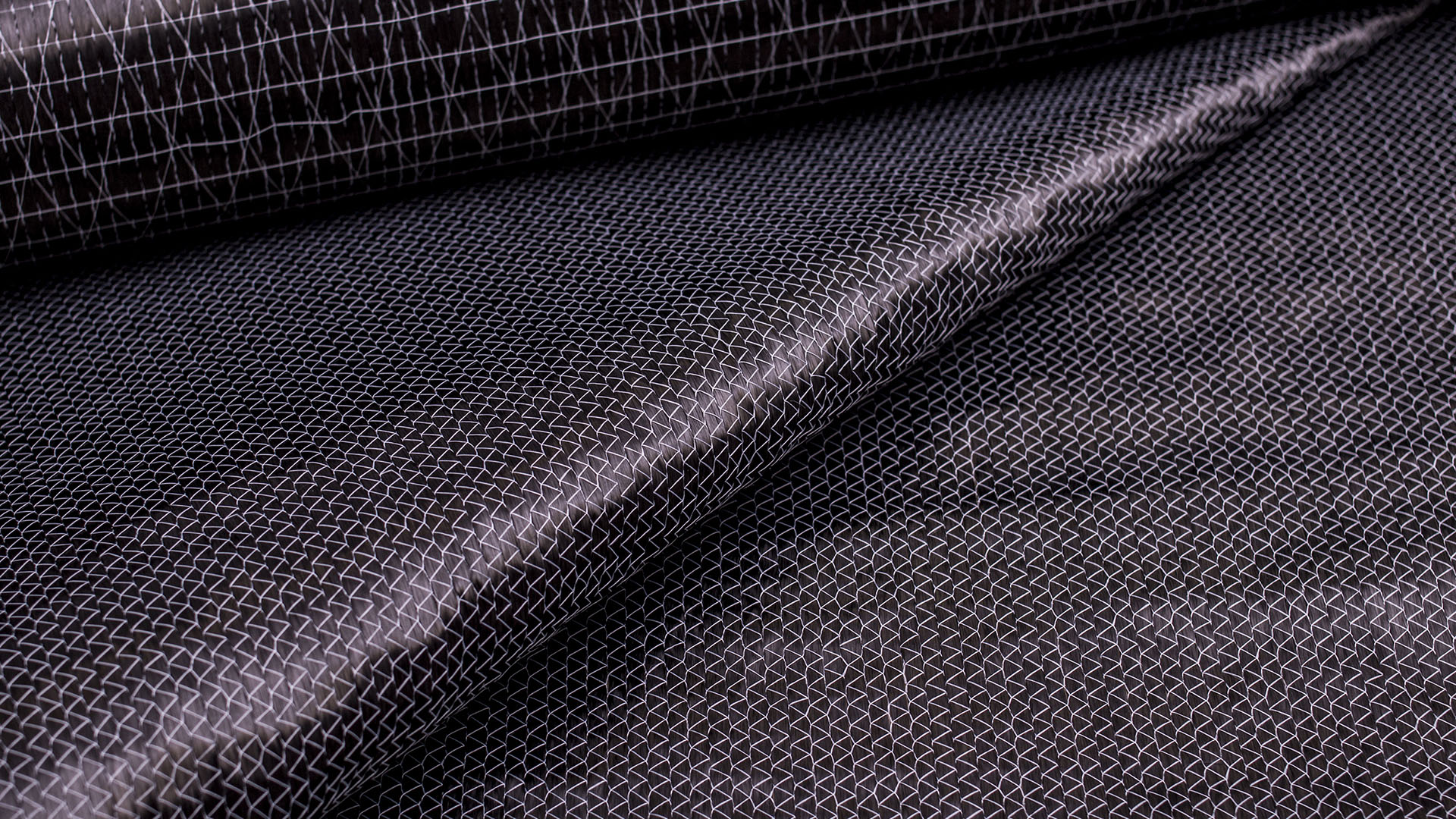
0°/90° vs. ±45°: how to choose the right reinforcement direction?
The simplest way to separate the two options is this:
0°/90° reinforcement is mainly for axial and transverse loads. ±45° reinforcement is mainly for shear and torsion.
Neither option is universally better. The right choice depends on the geometry of the part, the dominant load directions, the manufacturing process and the required stiffness-to-weight ratio.
In real laminate design, these orientations are often combined. A part may need 0° fibers for bending stiffness, 90° fibers for transverse stability and ±45° fibers for torsional performance.
When a multidirectional fabric becomes the better option
Some composite parts are exposed to several load types at the same time. In these cases, a simple 0°/90° or ±45° construction may not provide enough coverage on its own.
This is where triaxial and quadriaxial fabrics become relevant. Triaxial fabrics combine three fiber directions, while quadriaxial fabrics combine four. A quadriaxial construction can include 0°, 90° and ±45° orientations in a single reinforcement architecture, making it suitable for more complex multidirectional load cases.
For applications where several reinforcement directions are needed at once, Sky Composites’ article on quadriaxial carbon fiber fabrics explains how this type of structure supports multidirectional strength and efficient laminate build-up.
Need the right carbon fiber fabric for your application?
Whether you need 0°/90° reinforcement, ±45° layers or a more complex multiaxial fabric, Sky Composites can help you match the fabric construction to your load case, manufacturing process and performance requirements. Contact our team to discuss the right reinforcement setup for your next composite part.
Related products

Carbon fiber fabrics
Premium multiaxial, woven and special fabrics with superior load-bearing capacity, flex fatigue resistance, and customization options for advanced applications.
