
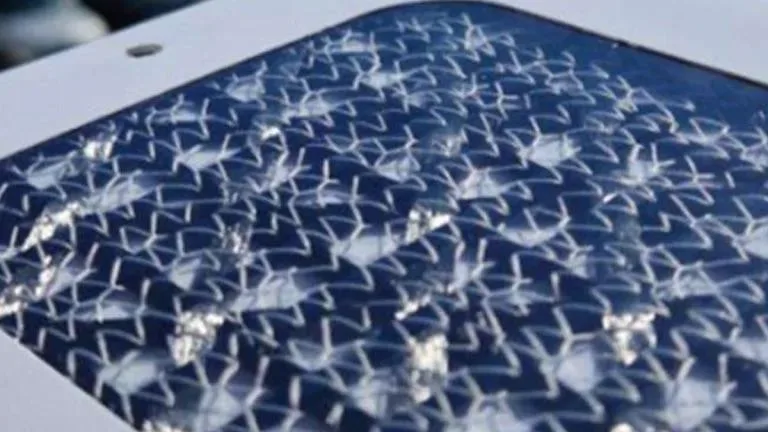
Quadriaxial carbon fiber fabric is a specialized type of multiaxial carbon reinforcement in which fibers are arranged in four directions to support multidirectional load performance and deliver more balanced behavior under loads coming from multiple directions, while maintaining the key advantages of carbon composites: high structural stiffness and low weight.
What is quadriaxial carbon fiber fabric and why does its architecture matter?
In the world of advanced composites, the fiber is the muscle, but the architecture is the strategy. How those fibers are arranged determines exactly how a finished part will react under pressure. Quadriaxial carbon fiber fabric represents the pinnacle of this engineering strategy.
Technically, it is a multiaxial non-crimp fabric (NCF) where carbon fibers are laid in four distinct orientations—typically 0°, +45°, 90°, and -45°. Unlike traditional weaving, these layers are held together by a lightweight polyester stitching thread.
By combining these four directions into a single, non-crimp structure, this layout ensures that reinforcement is spread across all primary load paths within the laminate. For engineers, this is a game-changer: it allows for the design of parts that are incredibly stiff and light, yet robust enough to maintain stability under the most complex, multi-directional mechanical demands.
The power of non-crimp architecture
To understand why quadriaxial fabrics are superior, we must look at the non-crimp construction. In traditional woven fabrics, fibers crimp as they pass over and under each other. This creates tiny bends that can weaken the material under high stress.
In NCF reinforcements, the fibers remain perfectly straight (parallel). In practical terms, this supports the performance of the laminate by providing:
- Maximum fiber efficiency: Since the fibers are not bent (no crimp), they can take the load immediately without straightening out first.
- Higher fiber volume fraction: Parallel fibers pack more tightly, allowing for a higher ratio of carbon to resin, which results in a stronger, lighter part.
- Optimized resin flow: The stitching creates micro-channels that help resin flow more consistently during infusion or RTM (Resin Transfer Molding) processes.
Key advantages of quadriaxial carbon fiber fabrics for manufacturers
Choosing quadriaxial fabrics over multiple layers of simpler materials offers significant production and structural benefits:
- Faster lay-up times: Instead of cutting and aligning four separate layers of unidirectional tape, a single layer of quadriaxial fabric covers all necessary directions.
- Improved impact resistance: The multi-angle layering helps dissipate energy more effectively, reducing the risk of delamination.
- Isotropic-like behavior: It mimics the uniform strength of metals while remaining significantly lighter, making engineering calculations more predictable for complex parts.
- Fatigue resistance: Ideal for components that face repeated, cyclic loading over many years.
Industrial applications: Where it matters most
Quadriaxial reinforcements are engineered for industries where failure is not an option and weight is a critical KPI:
- Marine: Used in high-performance hulls, decks, and bulkheads. It handles the unpredictable, multi-directional slamming loads of the sea while resisting fatigue.
- Automotive & transportation: Perfect for chassis reinforcements and structural pillars, offering maximum passenger safety with minimum weight.
- Wind energy: Suited for turbine blade roots and sections exposed to complex bending and torsional stresses.
- Sports & leisure: Used in sports equipment where low weight, stiffness, durability, and controlled flex all matter. Quadriaxial carbon fiber fabrics help parts handle multidirectional loads more evenly.
- Construction & retrofitting: A powerful tool for structural strengthening. When applied to beams or columns, it provides reinforcement against shear and seismic forces in multiple directions simultaneously.
- UAVs: Provides the structural integrity needed for fuselages and wing skins where torsional (twisting) stiffness is as important as bending strength.
Explore Sky’s carbon fiber solutions
Sky Composites provides a comprehensive portfolio of multiaxial reinforcements tailored to your specific engineering challenges. Whether you are looking for standard quadriaxial layouts or custom fiber orientations, our team is ready to provide the technical support needed for your next project—feel free to get in touch with us to discuss your requirements or request a quote.
Related products

Carbon fiber fabrics
Premium multiaxial, woven and special fabrics with superior load-bearing capacity, flex fatigue resistance, and customization options for advanced applications.
