
Many industries now face the same challenge: building larger, stronger and more efficient structures without adding unnecessary weight. Structural core materials help meet this demand by improving stiffness, stability and structural efficiency while keeping weight under control. This is one of the key reasons why structural core materials market trends point toward continued growth.
A growing market for lightweight composite structures
The global structural core materials market is already worth billions of dollars, reaching around USD 2.5 billion in 2023, and is expected to grow by up to 6–7% annually in the coming years.
This growth is closely linked to one clear direction: manufacturers across multiple industries need lighter, stronger and more efficient structures.
From wind turbine blades to marine panels, transport components and industrial sandwich structures, demand for lightweight composite solutions is increasing.
This is why sandwich construction is gaining ground. Instead of relying on solid, heavy laminates, engineers can use thin composite skins with a lightweight core in between.
The result is a structure that can deliver high bending stiffness, lower weight and more efficient material use.
Sandwich structures can support energy efficiency, easier handling and lower operating costs
Lightweighting is no longer only a priority in aerospace or motorsport. It has become a practical design requirement in many industrial sectors.
Lower weight can support energy efficiency, easier handling, faster installation, better transport efficiency and, in some cases, lower operating costs.
Structural core materials play a central role in this shift. In a sandwich panel, the core separates the outer skins and helps the structure resist bending, compression and shear loads. This makes it possible to build rigid, durable and lightweight panels without relying on heavy solid laminates.
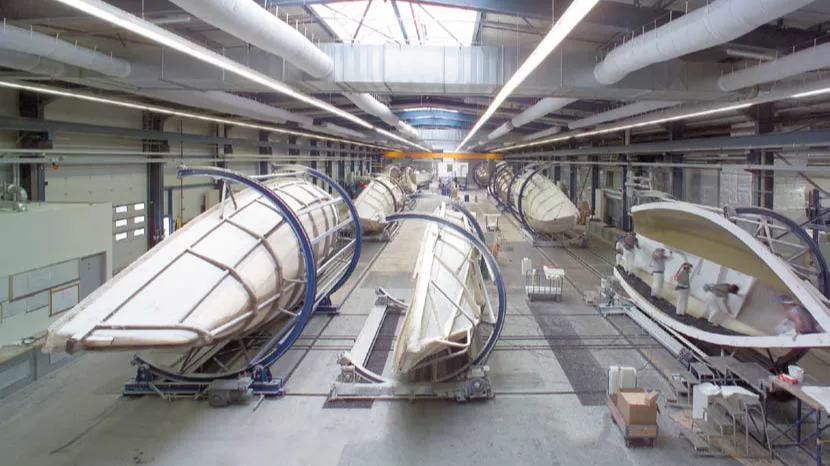
Key industries driving demand for structural core materials
Several industries are pushing the demand for structural core materials forward, each with slightly different performance priorities.
Wind energy: larger blades, lower weight
In wind energy, larger turbine blades require materials that support stiffness, fatigue resistance and weight reduction at scale. Core materials are used in blade shells, shear webs and nacelle components where reliable mechanical performance is critical.
Marine: strength, weight and durability in balance
In marine applications, builders need strong, lightweight structures that can withstand demanding operating conditions. Core materials are used in hulls, decks, bulkheads, superstructures and interior panels where weight reduction, durability and easier handling are important.
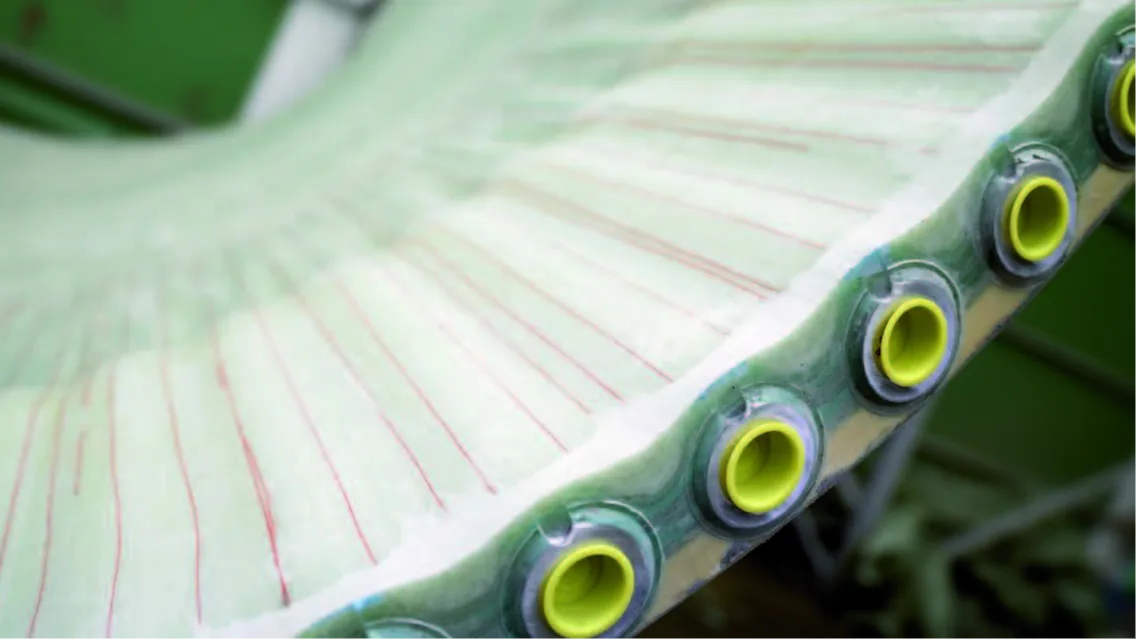
Material trends: different applications require different core materials
As sandwich construction spreads across more industries, the demand for core materials is becoming more diverse. Different applications require different balances of mechanical performance, weight, processing, sustainability and cost.
Foam cores remain important because they offer a versatile balance of mechanical performance, low weight and processability. PVC foam and PET foam are often considered for sandwich structures where strength-to-weight ratio, durability and efficient processing are important.
Balsa core remains relevant in applications where high compressive strength and natural material origin are valuable. At the same time, foam-based and recyclable options are gaining more attention as manufacturers evaluate sustainability targets and supply chain stability.
Honeycomb structures support lightweight panel design where high stiffness and low weight are key requirements. PMI foam and other high-performance core materials serve more demanding applications where temperature resistance, dimensional stability or specific mechanical properties are needed.
The important point is not that one core material is replacing all others. As more industries use sandwich construction, manufacturers need a broader range of core material options to match different structural, processing and performance requirements.
Application-driven core material selection in composite manufacturing
For composite manufacturers, the market trend is clear: lightweight design is becoming more application-driven. It is no longer enough to choose a core material based only on density or price.
The right solution depends on the product’s load case, manufacturing process, expected service environment, sustainability goals and production volume.
For a deeper technical overview, read our guide on types, properties and selection of structural core materials.
Choose the right direction for future composite applications
Sky Composites offers a broad portfolio of core material solutions for lightweight composite applications, including foam cores, balsa, honeycomb and high-performance core materials for demanding industries.
If you are looking for the right core material for your application, our team can help you compare the available options and choose a solution that fits your structural, processing and performance requirements. Contact our team to discuss the right core material for your next composite application.
Related products

Balsa core
High-density organic core material featuring high compressive strength.

PVC foam core
Excellent strength-to-weight properties and superior chemical stability.

PET foam core
Recyclable core materials with high compressive strength.

PMI foam core
Lightweight, high-strength material with exceptional mechanical properties and heat resistance.

Structural honeycomb
100% recyclable, durable solution with superior sound-damping and impact absorption.
